


PROJECTIONS
Small Acts
Small Acts are compact, easily tourable works that can stand on their own or come together as part of a larger performance. Playful and accessible, they invite audiences to engage directly with an idea, an object, an image or an experience — sometimes lightly, sometimes in unexpectedly deep ways.
Projections begins with two simple questions:
What do you hope for?
What do you fear?
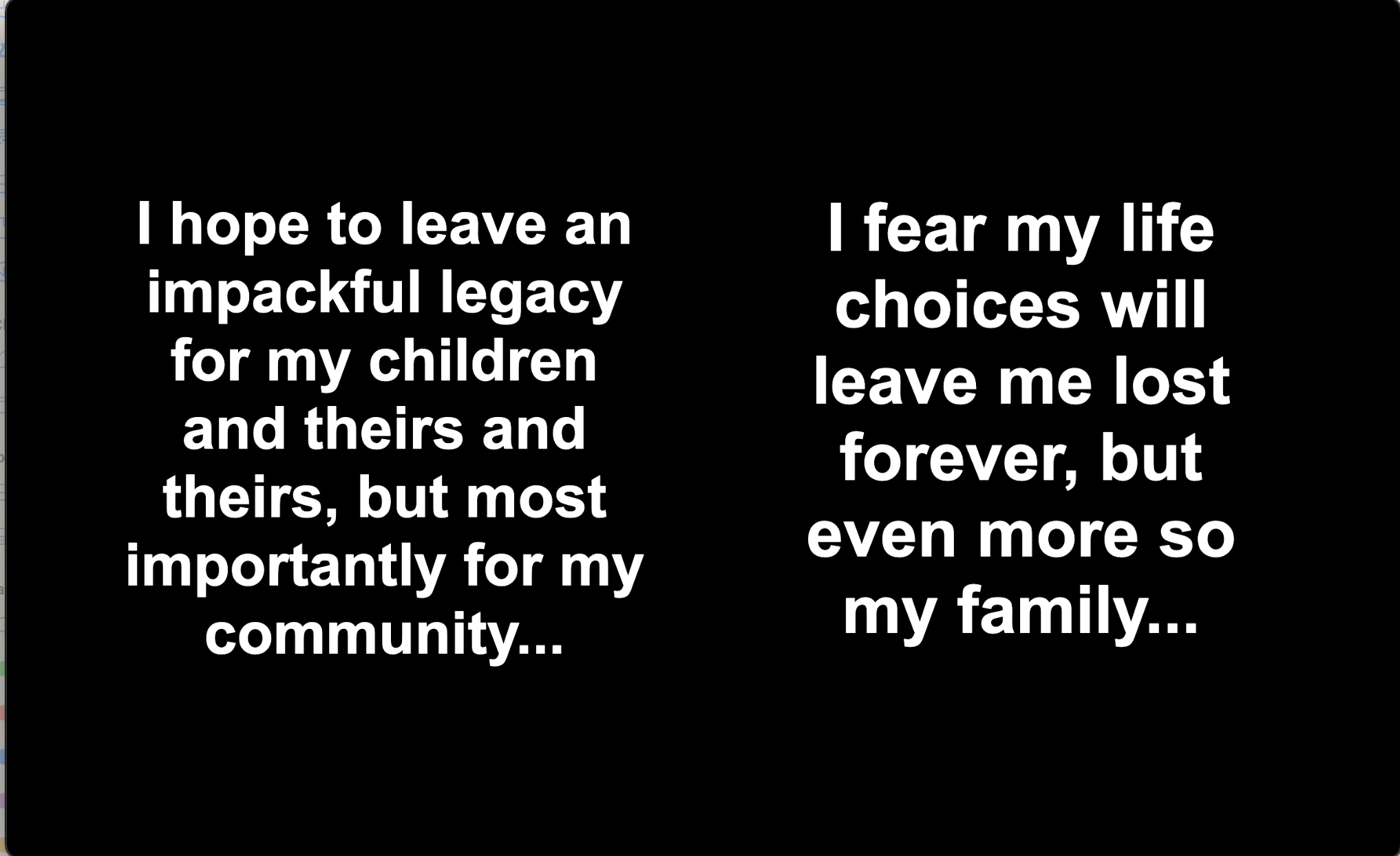
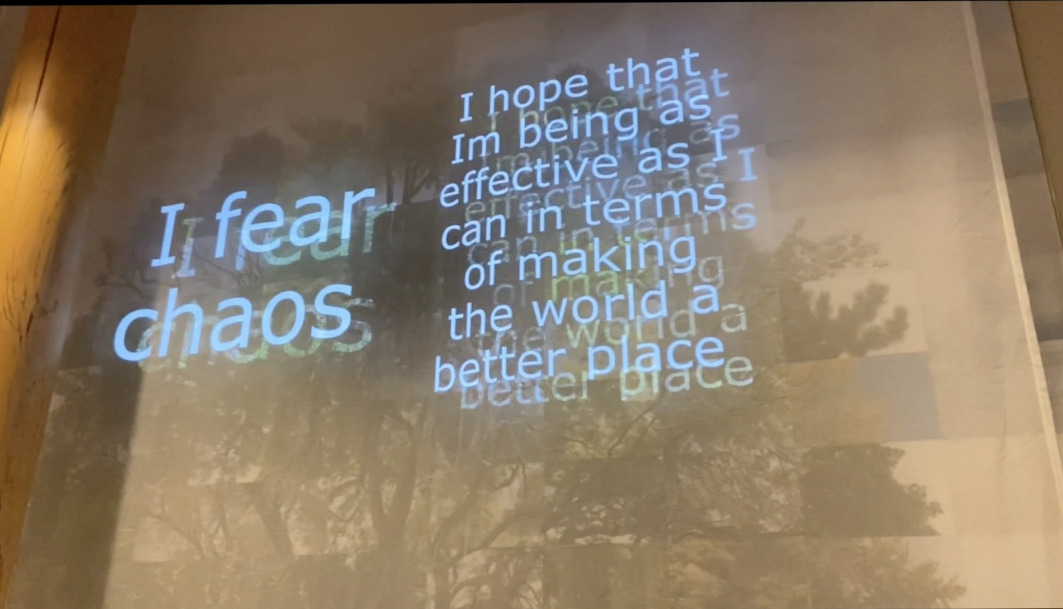
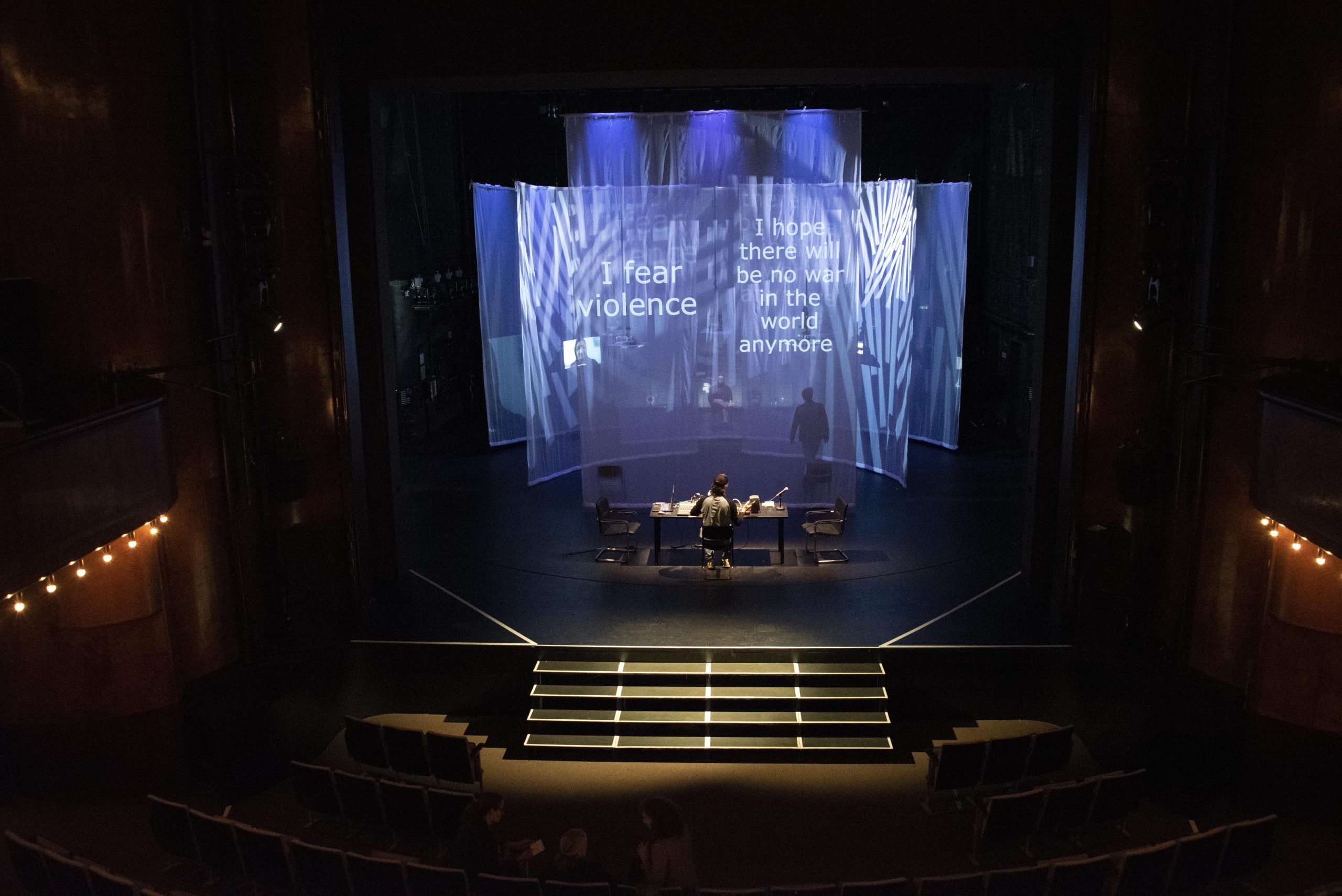
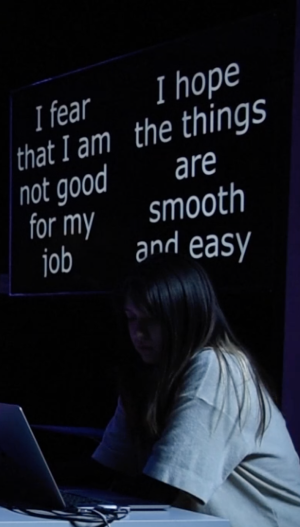
Participants are invited to offer one short response to each. Their answers are entered anonymously and projected at large scale into the space for everyone to see.
The two responses appear together.
That pairing matters. Hope and fear are often treated as opposites, but they can exist at the same time — sometimes around the very same thing. Projections makes that contradiction visible without trying to resolve it.
One person’s fear may be another person’s hope. Some responses are deeply personal, some political, some funny, some ordinary. Seen together, they reveal both how different people can be and how much emotional territory we share.
The large-scale projection changes the scale of something private. A thought that might normally remain inside one person’s mind suddenly becomes part of a public environment.
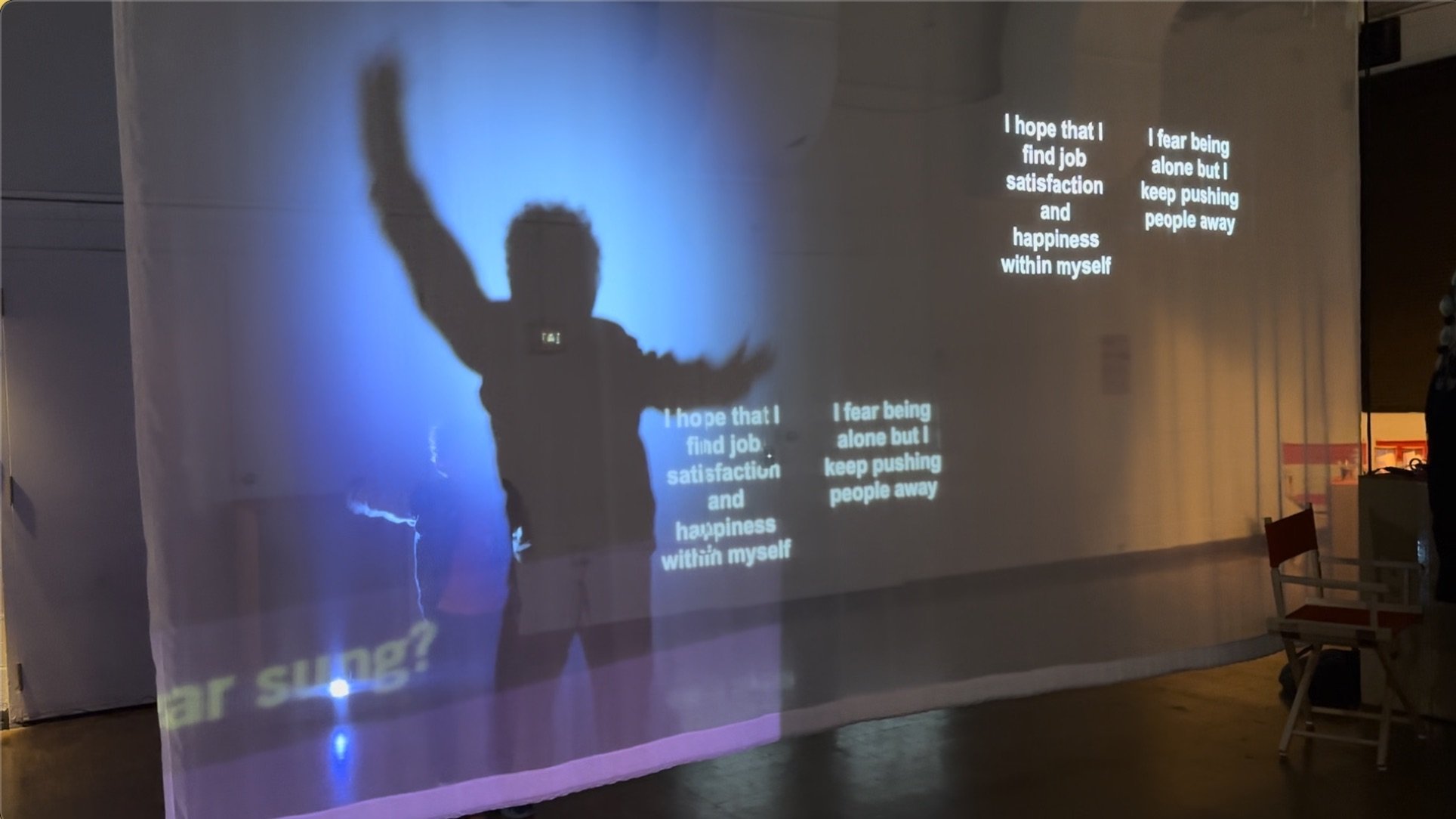
Participants can also stand in front of the projection and have their photograph taken with their own hope and fear, placing themselves physically inside the words they have contributed.
As more people participate, Projections becomes a shifting portrait of a particular place and moment — a collection of what people are carrying with them right then.
Like other Small Acts, Projections can be presented independently or combined with other participatory works as part of a larger event.
How it works
Think — choose one thing you hope for and one thing you fear.
Share — tell the host your two responses.
See — your hope and fear are projected anonymously at large scale.
Step into the image — if you like, stand in front of the projection and take a photograph with your words.
Origins
Projections developed through STO Union’s presentations of AI Rituals, where anonymous hopes and fears became part of the live visual environment.
The work later returned as one of the participatory elements in Hopes and Fears Assembly at Harbourfront Centre.
Selected Presentation History
Presented as part of AI Rituals
At the various locations where AI Rituals was presented, including HAU Hebbel am Ufer, Berlin and Toronto Artscape.
October 5–6, 2024 — Nuit Blanche, Harbourfront Centre, Toronto
Presented as part of Hopes and Fears Assembly.

Nadia Ross — concept and artistic direction
Nadia Ross is the founder and Artistic Director of STO Union and the 2016 recipient of the Siminovitch Prize. Her work has been presented across Canada and internationally and frequently explores the relationship between artists, audiences and the ways private experience becomes shared public material.
Atharva Jadhav — creative technologist
Atharva Jadhav is a digital artist and technologist with a degree in Digital Futures from OCAD University. His practice is experimental and exploratory, using digital tools, algorithms and real-time visual systems to create new forms of image-making and audience interaction.
He has written and directed award-winning short films, exhibited work at New York Fashion Week and Toronto’s Collision Gallery, and created real-time visuals for events and performances.
Credits
Concept and artistic direction — Nadia Ross
Creative technology — Atharva Jadhav
Produced by STO Union
Photos and documentation
Headshot of Nadia Ross by David Irvine
Headshot of Atharva Jadhav by @meghana_jadhav
Project photos by David Irvine
Additional documentation includes a screen capture from video of AI Rituals at Toronto Artscape with UKAI Projects
For the Harbourfront presentation:
Photos by David Irvine (for STO Union) and Nila Varzhevska (for Harbourfront)