

People Watching Station
Small Acts
Small Acts are compact, easily tourable works that can stand on their own or come together as part of a larger performance. Playful and accessible, they invite audiences to engage directly with an idea, an object, an image or an experience — sometimes lightly, sometimes in unexpectedly deep ways.
People Watching Station is a participatory project that turns one of our most ordinary private habits into a public game: comparing ourselves to other people.
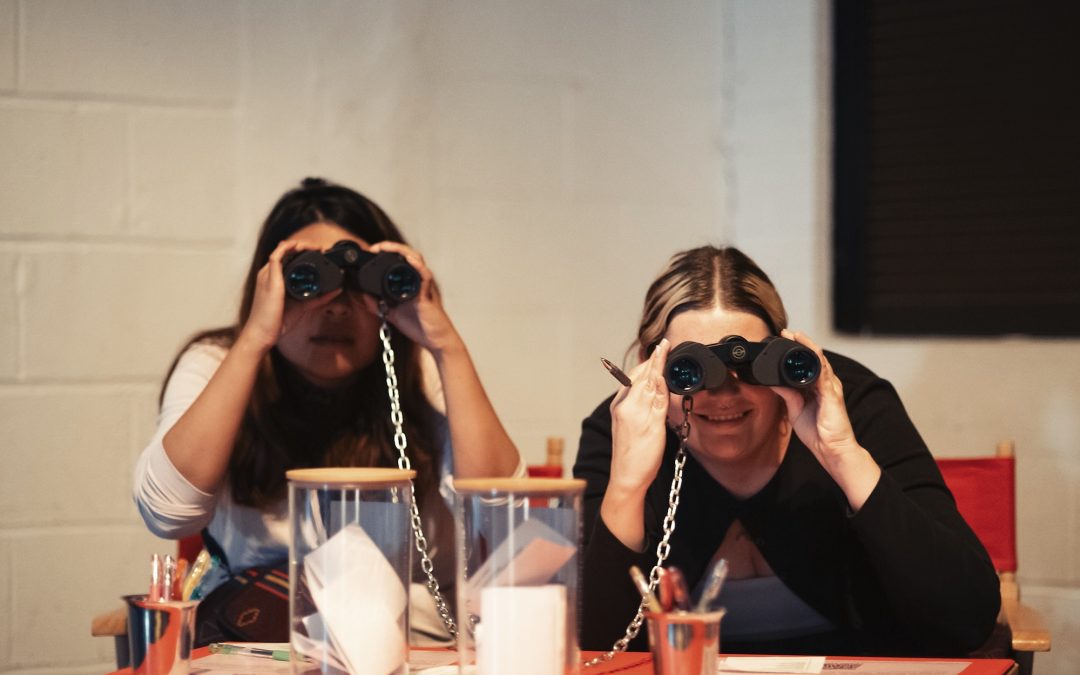
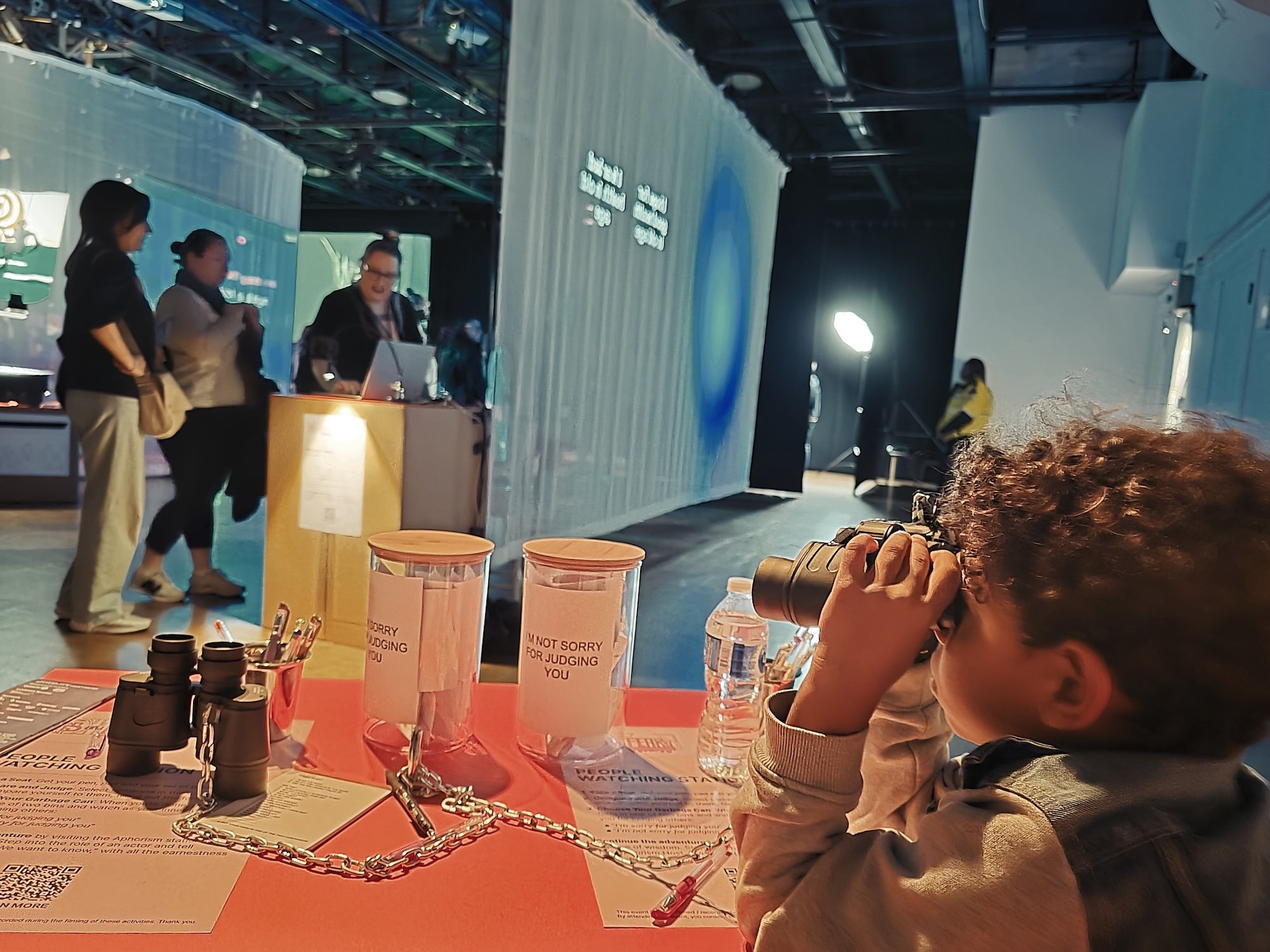
Participants take a seat, pick up a pair of binoculars and choose a stranger somewhere in the crowd. Using a questionnaire, they begin comparing themselves to that person — someone they have probably never met and know almost nothing about.
Who seems happier? More successful? More confident? More interesting? Who has the better life?
Of course, almost none of this can actually be known.
That is where the project becomes interesting. Human beings constantly measure themselves against other people, often using very little information. We notice a face, a body, clothing, behaviour or social situation and almost instantly begin to build a story around that person: who they are, what kind of life they have, whether they are happy, confident, successful, lonely, secure or struggling.
Those stories may be completely invented, but they still become material we use to understand ourselves.
People Watching Station plays with this extraordinary ability of the mind to create narrative from fragments. In a sense, everyone becomes both audience and playwright: observing a stranger, inventing a character, and then using that imagined story as a way of measuring their own life.
The project takes that constant, largely invisible act of storytelling and makes it visible, deliberate and slightly absurd.
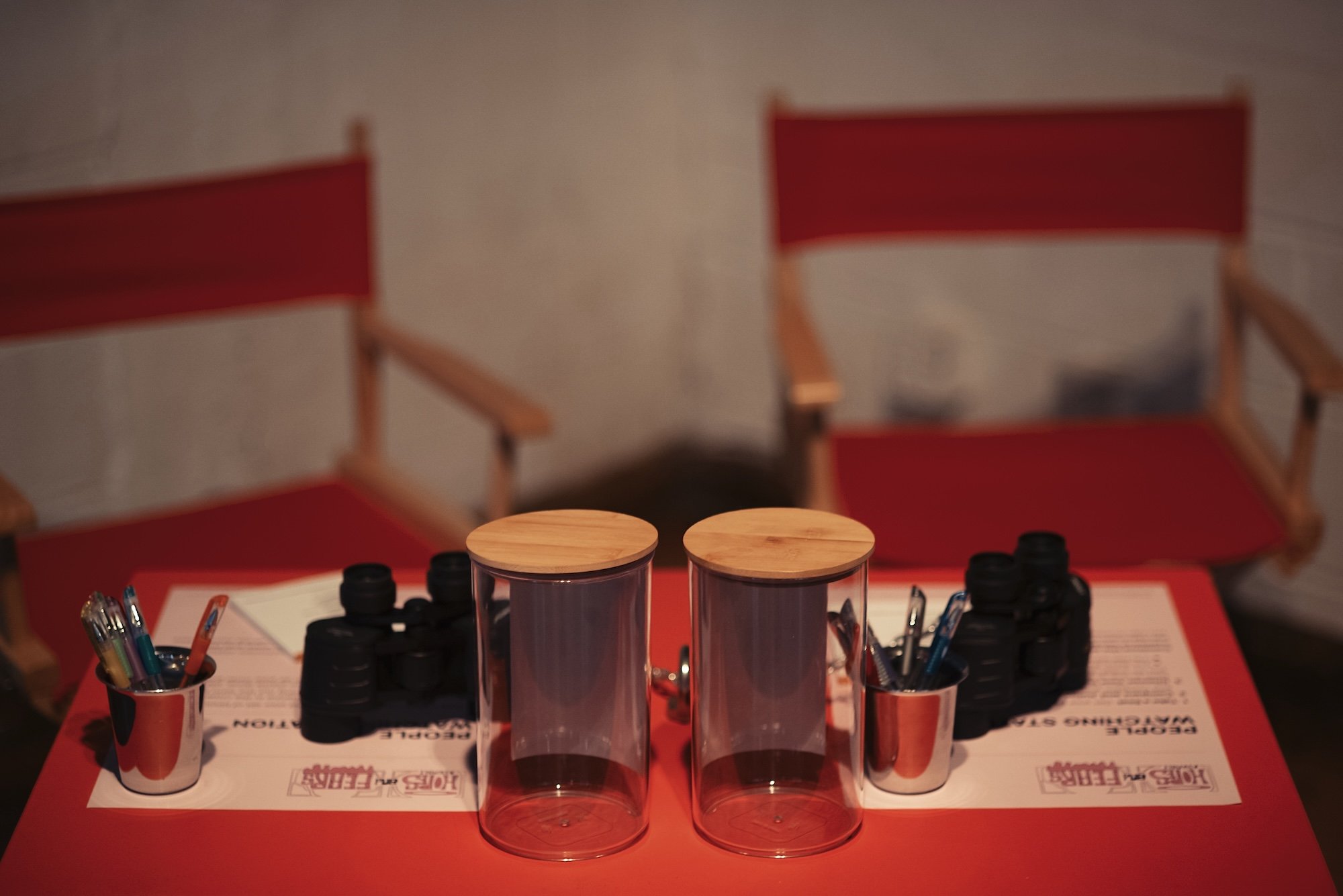
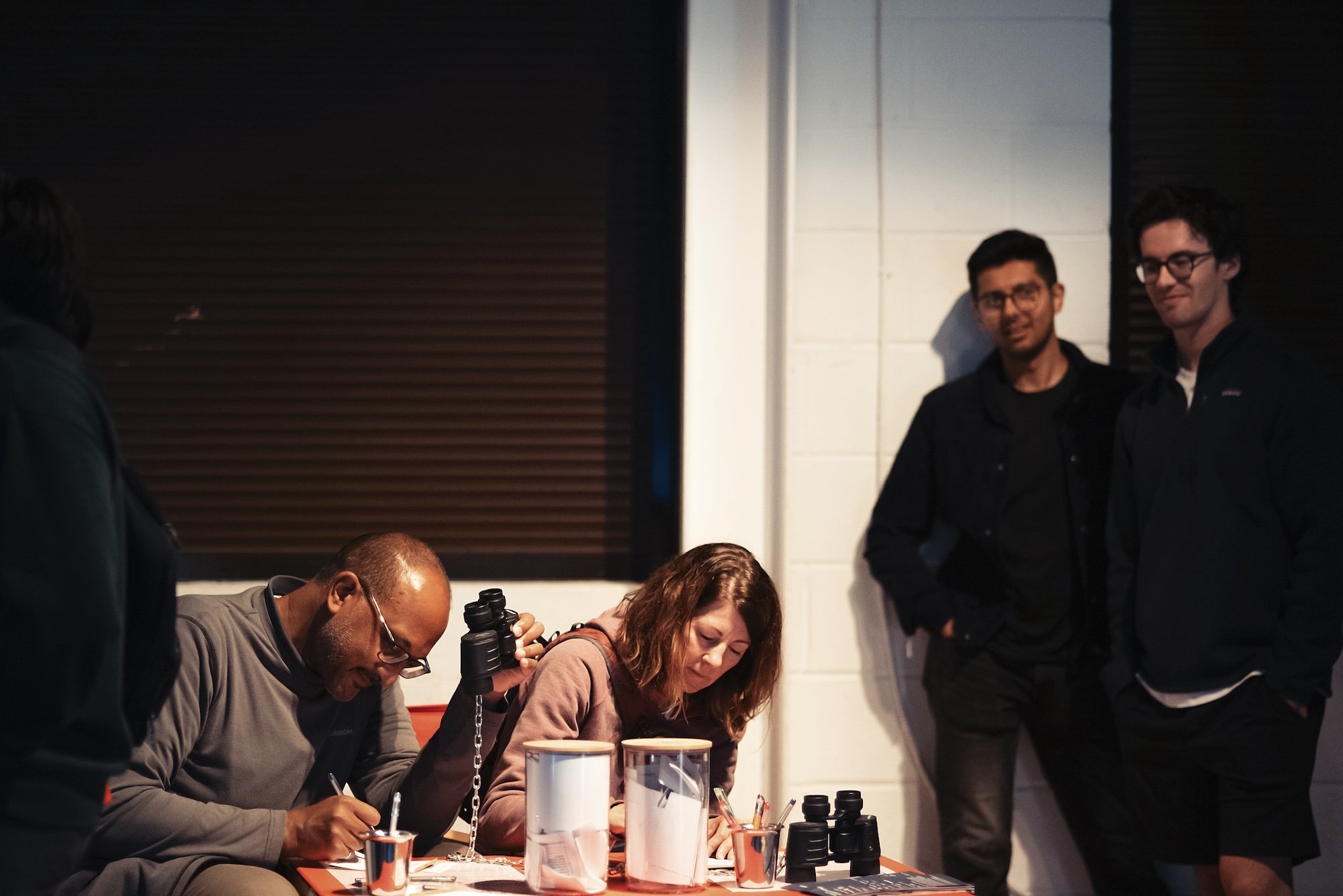
The binoculars exaggerate the act of looking. The questionnaire turns fleeting judgments into something concrete. And when participants finish, they must decide what to do with the evidence of their judging.
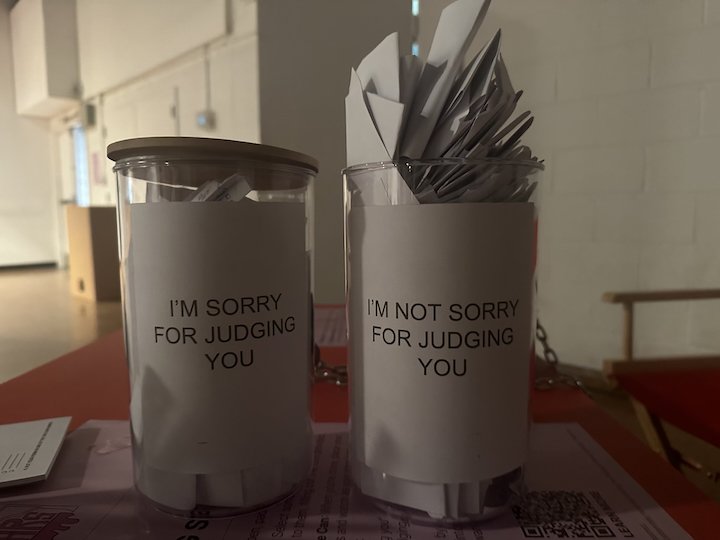
Two garbage cans await:
I’m sorry to judge you.
or
I’m not sorry to judge you.
The final joke turns the judgment back on the participant: after judging a stranger, we may immediately begin judging ourselves for having judged them.
What begins as a funny exercise in people-watching becomes a small experiment in social comparison, projection, self-consciousness and the stories we invent about strangers.
There is no lesson to learn and no correct response. People Watching Station simply gives the inner judge somewhere to play — and gives us a chance to catch it in the act.
How it works
Take a seat — pick up a pair of binoculars, a questionnaire and a pen.
Choose someone — find a person somewhere in the surrounding crowd.
Compare — answer the questions by comparing yourself with the person you are watching.
Notice what happens — pay attention to how much you think you know about someone you have never met.
Choose your bin — when you are finished, decide where your questionnaire belongs:
I’m sorry to judge you
or
I’m not sorry to judge you
Like other Small Acts, People Watching Station can be presented independently or combined with other works to create a larger participatory environment.
Origins
People Watching Station was originally created as part of STO Union’s 2015 production What Happened to the Seeker?, where it existed alongside a collection of participatory encounters that invited audiences to examine some of the strange ways human beings search for meaning, certainty and guidance.
It later developed a life of its own as a small, portable work that can be installed in theatres, festivals and public spaces.
Selected Presentation History
May 27–29, 2015 — Festival TransAmériques, Montreal
Presented as part of What Happened to the Seeker?
June 9–13, 2015 — Magnetic North Theatre Festival, Ottawa
Presented as part of What Happened to the Seeker?
June 18–20, 2015 — HAU Hebbel am Ufer, Berlin, Germany
Presented as part of What Happened to the Seeker?
October 1–3, 2015 — The Theatre Centre, Toronto
Presented as part of What Happened to the Seeker?
November 23–28, 2015 — Theatre Junction Grand, Calgary
Presented as part of What Happened to the Seeker?
2017 — PAF, Farrellton, Quebec
October 5, 2024 — Nuit Blanche, Harbourfront Centre, Toronto
Presented as part of Hopes and Fears Assembly.


Nadia Ross — concept and creation
Nadia Ross is the founder and Artistic Director of STO Union and the 2016 recipient of the Siminovitch Prize. Her work has been presented across Canada and internationally and frequently explores the relationship between performers and audiences, as well as the habits, structures and assumptions that shape everyday life.
Photos by David Irvine, Nadia Ross, Eric Fruhauf and Nila Varzhevska (for Harbourfront)
Headshot of Nadia Ross by David Irvine